A 90-day habit tracker built for one weekly check‑in, not daily logging.
Most habit trackers fail on a Tuesday and get abandoned by Friday. This one asks for 10 minutes every Sunday, and has a built-in rule for the weeks that go wrong instead of a reason to quit.
Get the System — from $17
Three phases, nine habits, twelve weeks
Foundation
Your chaotic habits stop resetting every few days: sleep, energy, and routines become stable enough to track.
- Fixed Wake Time
- 10-Min Morning Movement
- Fixed Bedtime
Building
Hydration, nutrition, and stress stop being inconsistent reactions and become structured behaviors.
- Morning Hydration
- Anti-Inflammatory Breakfast
- Breathing — 5 Minutes
Integration
Exercise, focus, and weekly structure run without daily effort.
- Exercise 30 Min / 3x
- Digital Disconnect
- Weekly Review
Each phase locks stability instead of replacing it.
Built-in recovery rules, not willpower
85% Rule. Progress does not require perfect weeks, only continuity: aim for at least 6 out of 7 days per habit.
Never Miss Twice
One failure is normal. Two in a row creates a reset pattern, and this rule is built to interrupt it before it becomes the new normal.
48-Hour Comeback Protocol
After a disruption, you don't restart your entire system. After 3 or more missed days, resume your keystone habits first (Fixed Wake Time, then Morning Movement), add Fixed Bedtime on day 2, then bring the others back one per day.
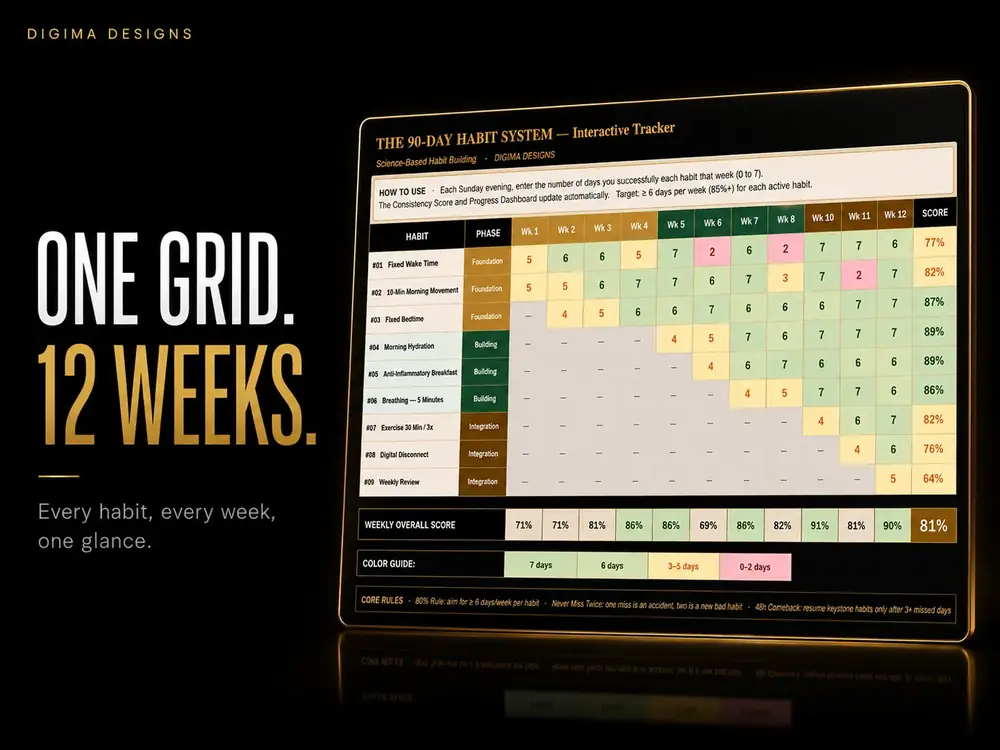
A guide you can print, and a tracker that does the math
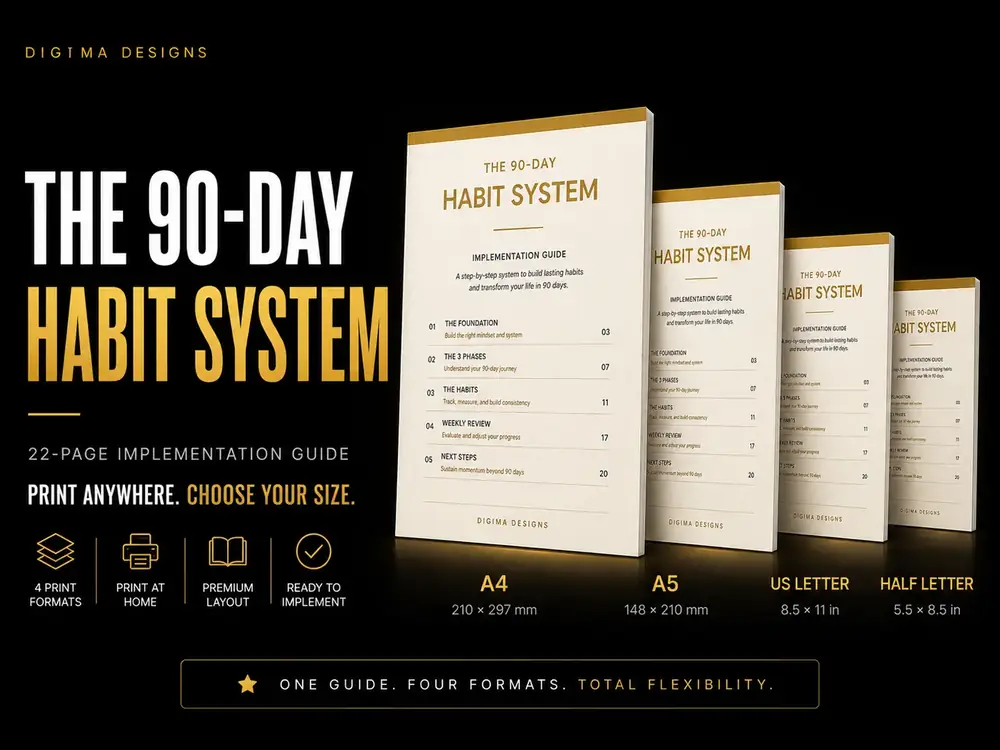
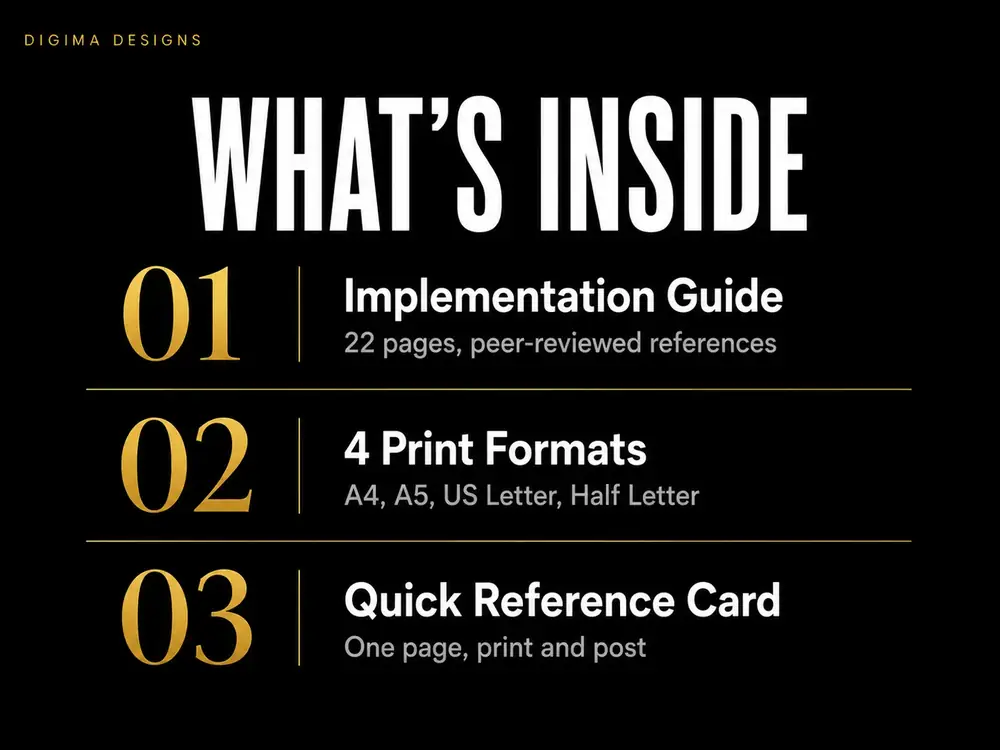
Implementation Guide
Cited research references, in 4 print formats — A4, A5, US Letter, Half Letter — plus a one-page Quick Reference Card.
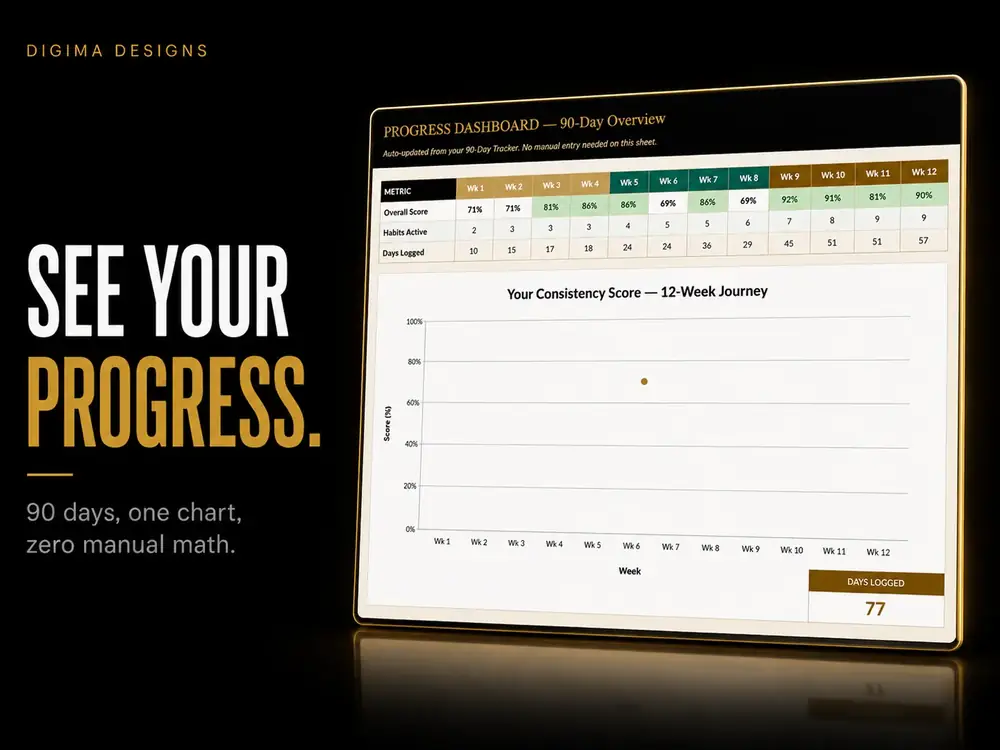
Progress Analytics Dashboard
Auto-updates from your weekly entries — no manual charting. See your 12-week consistency score at a glance.
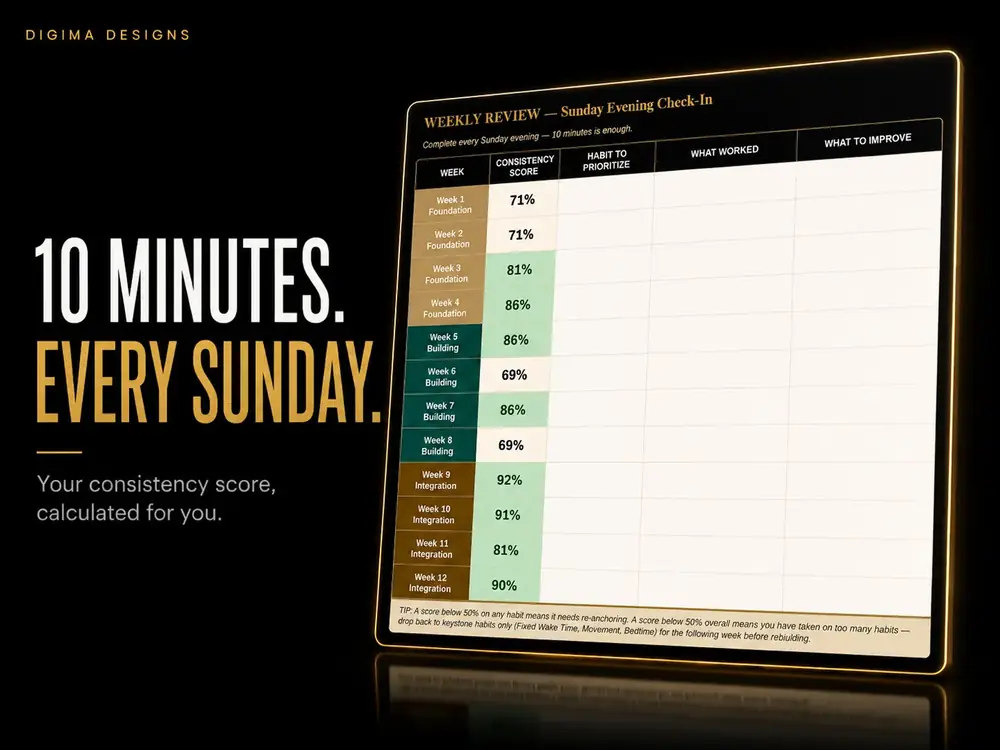
Weekly Review Dashboard
10 minutes every Sunday evening: your consistency score, what worked, what to improve.
Built to actually use
No app to install, no account to create. Print the guide; with Premium, run the tracker in Google Sheets or Excel.
What the weekly check-in looks like in week 3
By week 3 you run three habits. On Sunday evening you enter how many days you did each one. In Premium, the score appears on its own.
| Habit | Days done (0–7) |
|---|---|
| #01 Fixed Wake Time | 6 |
| #02 10-Min Morning Movement | 7 |
| #03 Fixed Bedtime | 5 |
| #04–#09 | not started yet |
| Consistency Score (18 of 21 days) | 86% |
- Enter the days. Three numbers, about a minute. Habits you haven’t started yet stay blank until their week.
- Read the score. The target is 6 or more days per habit. Here, bedtime (5 days) is the one to prioritize next week.
- Note what worked and what to improve. Two lines in the Weekly Review. A habit under 50% needs a new anchor, not more willpower.
Illustrative example to show the format, not a customer result. In Standard you do the same count by hand.
Two ways to run it
Standard
The guide, you track by hand
- Implementation Guide (4 PDF formats)
- Quick Reference Card (PDF)
- No automated tracker, dashboard or automatic scoring
Premium
Everything calculated for you
- Everything in Standard
- Interactive Habit Tracker (Excel + Google Sheets)
- Weekly Review Dashboard
- Progress Analytics Dashboard
The difference in one line: with Standard you count your days and work out your score yourself. With Premium you enter the days done (0 to 7) per habit and the Consistency Score, the weekly review and the 12-week dashboard are calculated for you.
Both versions: one-time payment · instant digital download · 14-day money-back guarantee
Common questions
Stop restarting every Monday.
One weekly check-in. Three phases. A built-in rule for when a week goes wrong.
Get the System — from $17